𝗪𝗵𝘆 𝗖𝗼𝗮𝘁𝗶𝗻𝗴 𝗖𝗼𝗻𝗱𝘂𝗰𝘁𝗶𝘃𝗶𝘁𝘆 𝗠𝗮𝘁𝘁𝗲𝗿𝘀 𝗶𝗻 𝗠𝗮𝗿𝗶𝗻𝗲 𝗖𝗼𝗿𝗿𝗼𝘀𝗶𝗼𝗻 𝗣𝗿𝗼𝘁𝗲𝗰𝘁𝗶𝗼𝗻
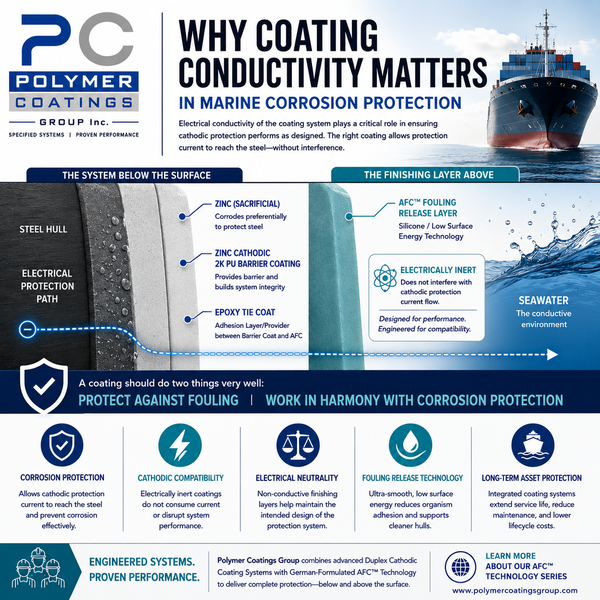
When role-players discuss marine coatings, most conversations focus on:
▫ Fouling prevention
▫ Fuel efficiency
▫ Surface smoothness
▫ Environmental compliance
But there is another engineering consideration that often receives far less attention:
𝗘𝗹𝗲𝗰𝘁𝗿𝗶𝗰𝗮𝗹 𝗰𝗼𝗻𝗱𝘂𝗰𝘁𝗶𝘃𝗶𝘁𝘆.
For vessels operating in seawater, corrosion protection is an electrochemical issue. Every steel hull exists within an electrical environment where corrosion occurs through the movement of ions and electrical potential differences between metals, seawater, coatings and cathodic protection systems.
This raises an important question:
𝗖𝗮𝗻 𝘁𝗵𝗲 AFC 𝗶𝗻𝗳𝗹𝘂𝗲𝗻𝗰𝗲 𝘁𝗵𝗲 𝗽𝗲𝗿𝗳𝗼𝗿𝗺𝗮𝗻𝗰𝗲 𝗼𝗳 𝘁𝗵𝗲 𝘂𝗻𝗱𝗲𝗿𝗹𝘆𝗶𝗻𝗴 𝗰𝗮𝘁𝗵𝗼𝗱𝗶𝗰 𝗽𝗿𝗼𝘁𝗲𝗰𝘁𝗶𝗼𝗻 𝘀𝘆𝘀𝘁𝗲𝗺?
The answer depends largely on the chemistry and composition of the coating itself.
Some anti-fouling systems, utilize metallic compounds, conductive additives or biocidal systems that interact with the marine environment.
Others are designed as electrically neutral surface technologies whose primary purpose is fouling control rather than electrochemical activity.
For a corrosion engineer, this distinction is significant.
A coating may successfully prevent marine growth, but engineers must also consider:
▪ Electrical neutrality
▪ Compatibility with cathodic protection systems
▪ Galvanic interaction potential
▪ Long-term adhesion performance
▪ Lifecycle asset protection
That is why more attention is given globally to advanced fouling-release technologies based on silicone and low-surface-energy chemistry.
These systems create an ultra-smooth, non-stick surface designed to reduce organism adhesion while remaining electrically inert.
Corrosion engineers, now focuses on:
𝗪𝗵𝗮𝘁 𝘀𝘁𝗼𝗽𝘀 𝗳𝗼𝘂𝗹𝗶𝗻𝗴 𝘄𝗵𝗶𝗹𝗲 𝗿𝗲𝗺𝗮𝗶𝗻𝗶𝗻𝗴 𝗰𝗼𝗺𝗽𝗮𝘁𝗶𝗯𝗹𝗲 𝘄𝗶𝘁𝗵 𝗺𝗼𝗱𝗲𝗿𝗻 𝗰𝗼𝗿𝗿𝗼𝘀𝗶𝗼𝗻 𝗽𝗿𝗼𝘁𝗲𝗰𝘁𝗶𝗼𝗻 𝘀𝘁𝗿𝗮𝘁𝗲𝗴𝗶𝗲𝘀?
As vessel owners continue seeking longer maintenance intervals, lower fuel consumption and improved lifecycle costs, the relationship between fouling control and corrosion protection is becoming increasingly important.


